Archives for posts with tag: Special Needs

IMG_4979
Thanksgiving is coming up, and that means tons of extra time with your little ones. Even though holidays are a welcome treat, Thanksgiving can be stressful. Sometimes, it can be hard to balance your kids and kitchen duty, and there never seems to be enough time to get everything done! You can avoid a meltdown AND spend time with your kids by getting every, and I mean every, hand on deck.

Why not do some Thanksgiving crafts with your kids? It will not only give them something fun to do, but you can also kill two birds (pun intended) with one stone by giving them an activity that contributes to the feast. Who knows, maybe they’ll love it so much they’ll take off and do it on their own, leaving you to baste the turkey and bake all that delicious food.

For this constructive project, let’s get creative with the place settings for the big feast! You see, two birds: one stone. Have fun with your children on this one — it’s an activity suited for kids of all abilities.

Here’s what you’ll need for your DIY kids’ Thanksgiving crafts:

  • construction paper
  • poster paint
  • paintbrush or Q-tip
  • scissors
  • the great outdoors
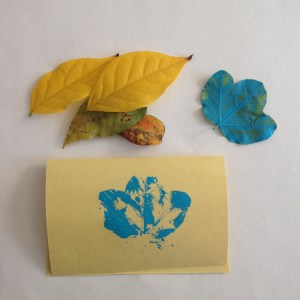
IMG_4975

Your final product!

Steps:

1. Go Outside

That’s right. Throw on a sweater, get out of your kitchen, and enjoy the beauty in your back yard or go for a walk around the neighborhood. The purpose of this little adventure is to not only have a peaceful start to the big weekend, but to collect some interesting leaves with the kids. Take a moment to relax by spending a few minutes with the family and collect leaves in various shapes. Since these will be used for place cards, the leaves can be small.

IMG_4970

2. Cut Up

Put on some festive music and get ready to get crafty. Gather the construction paper, and let the kids choose their favorite colors — be it the traditional orange and yellow palette or a fun one all their own — purple and all.

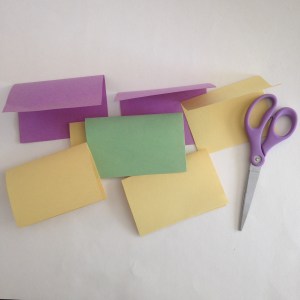
Now, take the scissors and cut the paper vertically down the middle.

Then, fold each piece in half, and cut along the fold.
IMG_4968

Fold each piece down one more time to get the final shape of your placecard. Do several of them so you have a collection of plain placecards like this: 

IMG_4969

3. Get Colorful

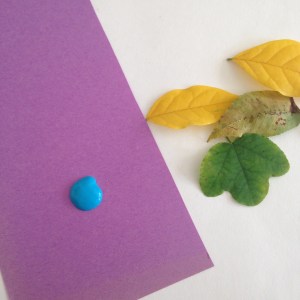
Grab your paint now, because it’s time to get colorful. 
IMG_4971

Using a paint brush, Q-tip, or foam brush, paint one side of a leaf and press painted-side down onto the bottom half of a placecard. Press down on all sides.

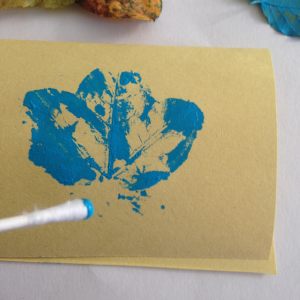
Carefully remove. If it’s not a complete shape, dab some paint back the leaf and try again, remembering to press down. 

IMG_4973

4. Final Touch

Once your placecard has dried — it won’t take long! — use a marker or  paintbrush to add a wee stem to the top of the leaf. You can also add a name to the front of the card now, or feel free to wait until the stem dries and add a name to the inside.
leaf

You can also use this project to make cute notecards for thank-you notes or Christmas cards. This size would make a perfect gift card, so if you plan to spend a day getting the home ready for the holidays, why not let the little ones pick up on this craft again to create amazing little tags for your pretty presents?

Do you have a crafty holiday tradition in your family? Drop by our Facebook page and tell us about it!
Epilepsy Awareness Month - Special Needs Essentials

As a voice in the special needs community, we understand that living with epilepsy is difficult. People with epilepsy deal with multiple challenges, stress, and physical and emotional pain. Thankfully, awareness and education are great ways to shed light on this condition and work towards progressive solutions. That’s why celebrating November Epilepsy Awareness Month (NEAM) is so important.

Also known as a seizure disorder, epilepsy is a neurological condition that affects the nervous system. It is usually diagnosed after a person has had at least two seizures that were not caused by some known medical condition.

Seizures seen in epilepsy are caused by disturbances in the electrical activity of the brain. The seizures in epilepsy may be related to a brain injury or genetics, but often the cause is unknown. Epilepsy is more common than you may think. Check out these surprising numbers to get the details.

  • 65 Million: Number of people around the world who have epilepsy
  • Over 2 Million: Number of people in the United States who have epilepsy
  • 1 IN 26 people in the United States will develop epilepsy at some point in their lifetime
  • Between 4 and 10 out of 1,000: Number of people on earth who live with active seizures at any one time
  • 150,000: Number of new cases of epilepsy in the United States each year
  • ONE-THIRD: Number of people with epilepsy who live with uncontrollable seizures because no available treatment works for them
  • 6 OUT OF 10: Number of people with epilepsy where the cause is unknown

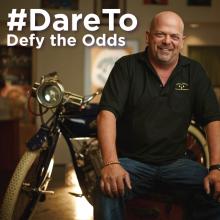
DareTo Defy the Odds - Rick Harrison

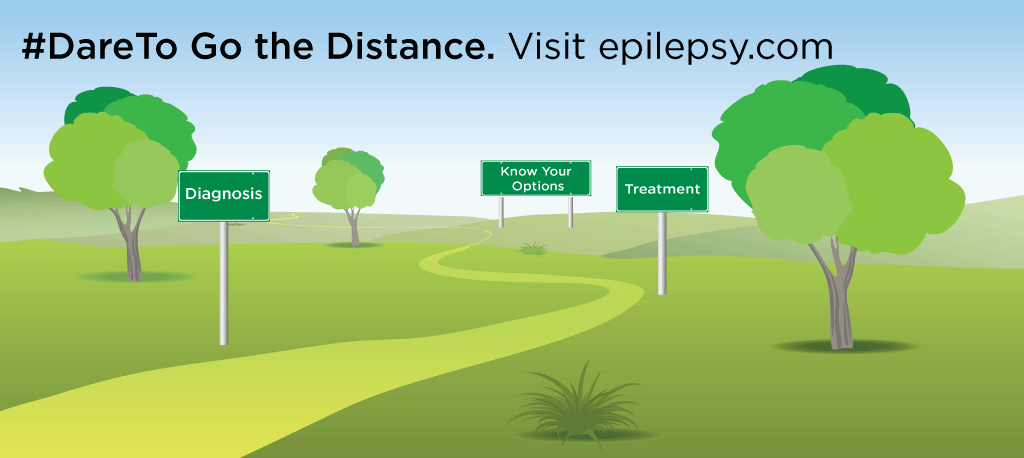
The National Epilepsy Foundation is a leading resource for people with epilepsy to learn their treatment and therapy options as they strive to become seizure-free. Last year, the National Epilepsy Foundation launched a new year-long education and awareness campaign called #DareTo. The campaign focuses on breaking down the barriers that can prevent people with epilepsy from reaching their fullest potential. They challenged the general public to post their dares over social media to spread awareness and spark inspiration.

“My epilepsy taught me to be a fighter,” said Rick Harrison, a spokesperson for the National Epilepsy Foundation and star of the hit TV program Pawn Stars. “ When I said I wanted to make a TV series out of my pawn shop, people thought I was nuts. But I dared to defy the odds, and Pawn Stars was born. If you have epilepsy, dare to live to your fullest potential. The Epilepsy Foundation will help you dare.”

The Epilepsy Foundation is an unwavering ally in raising awareness, providing support, and funding research to bring new treatments and therapies to market in a time frame that matters for people with seizures. People living with epilepsy, their families and their caregivers are served by their network of more than 40 Epilepsy Foundation affiliates around the country.

Local Foundation affiliates provide information and referral assistance; maintain individual and family support services; serve as advocates for the rights of those with epilepsy; and offer community-based education to employers, emergency first-responders, school nurses, and other allied health professionals. Find your local Epilepsy Foundation here.

How to you #dare to make a difference? Drop by our Facebook page and share your stories.