
 Today we are honored to share the very valuable advice of Susan N. Schriber Orloff, OTR/L, FAOTA! She is the author of the book Learning Re-Enabled, a guide for parents, teachers and therapists (featured by the National Education Association), as well as the CEO/Exec. Director of Children’s Special Services, LLC an occupational therapy service for children with developmental and learning delays in Atlanta, GA. She can be reached through her website or at susanorloff@childrens-services.com, on Twitter, Facebook or on her blog.
“When thinking of playful engaging activities for “special needs” children it is important to know that everything can be adapted to meet the needs of any child within a play environment.
It is more important to think how than what. A simple game of checkers can be made easier by putting strings in the directions the player is allowed to move, pick up sticks can be arranged to follow a pattern on an underlying mat so that the game includes color and positional matching, not to mention pincer grasp. Dominoes can be color coded on their dots so that the game turns into multiple matching tasks, not just one; and so forth.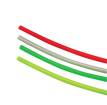
Parents do not have to spend a lot of money in special needs catalogues looking for just the “right” toy or game when all games can be “right” if used creatively and with necessary adaptations.
When selecting special toys or equipment think about versatility and how many ways you can use the item. Special Needs Essentials is just that, the “essentials” so think about the BEST pieces to buy that cover a range of opportunities for multiple functions.
For example a “chewy tube” can also be an in-hand manipulation toy; neon bracelets can 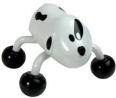 be adapted pick-up sticks; hand held massagers can be part of a relay race game; and puppets designed for increasing hand skills can be used for imaginative play to increase social skills.
There is also the Old Fashioned concept of making a game or craft together. Before all the left over Christmas wrapping paper is gone, make a sculpture with the paper, watered down with school glue and some ModgePodge. Think about making toy storage boxes that the child will be invested in using by covering them 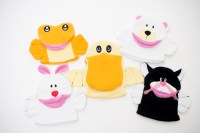 with the left over wrapping paper and making it shiny with the ModgePodge. Parent and child will get a lot more out of this activity than the end product—they will be talking to each other and this is an excellent time to use and build vocabulary and social skills.
The most important thing to think about is ‘how can this activity enhance my child’s total developmental abilities’: physical (hand skills and/or gross motor), neurological (thinking, reasoning and sensory) and perceptual (seeing and processing) skills.
Your options are endless and they are most likely to be already in your home rather than a fancy (and expensive) catalogue, or in a store near-by.”
Susan N. Schriber Orloff, OTR/L, FAOTA



 Special Needs Essentials Blog