
Good afternoon! Today we are happy to share some valuable advice on educational toys by Cathy from Bountifulplate! Cathy is a homemaker/wife and a mother to a 10-year old son with Autism and ADHD, an 18-year old daughter who is a college freshman and a stepson who is 30. Originally from Maryland, she has lived in the Midwest for 13 years.

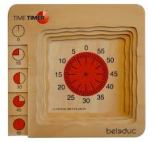 “My 10-year old son, Dominic, can put together 500-piece puzzles. When we first discovered he could do that, we asked everyone we knew to get him puzzles with several hundred pieces for birthday and Christmas gifts. Well, guess what? He frequently goes back to the wooden puzzles we gave him when he was a toddler that have ten pieces or less. He will sit on the floor for hours and hours and put them together over and over and over again. For children with Autism, like Dominic, it’s all about the routine, order and sameness!!! When we travel, I have even been known to bring his favorite puzzles along. 🙂 Why not? It brings him some familiarity.
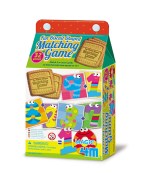 Dominic can also recall when a certain special event happened, including the month and day of the week. I think this is a skill known as “calendar calculation.” We didn’t even know he had this skill until a few months ago. He loves any kind of matching game – it’s a favorite thing for him to do! He’s also fascinated by dominoes, though I think sometimes, he would rather blow them down than try and match them!
Puzzles and matching games teach your child so much, like visual perception, memory, fine motor, critical thinking, sequencing, reasoning, planning and logic skills. These are important skills that will serve them for a lifetime. Did you ever think that so many awesome things were going on while your child was playing with a puzzle or a matching game? Amazing, isn’t it? Your child will think that they are “playing,” when in actuality, so many awesome “teachable” moments are going on!”
Cathy B.


 Special Needs Essentials Blog