
Dear readers,
We updated our post on weighted blankets with a consolidated scientific content so you can understand better the benefits of pressure! Check it out:
 Have you ever heard of weighted blankets? This revolutionary tool provides pressure and sensory input, similar to a good hug. It is made of plastic pellets, evenly distributed in a quilted pattern in order to provide a widespread sensation of pressure. Studies have proven that the pressure provided by hugs or weighted tools enables the release of serotonin, a hormone that calms and relaxes the body. It also stimulates oxytocin, a hormone that promotes feeling of contentment and willingness of social bonding, among others.
This sensation is particularly valuable for individuals affected by autism and other sensory seeking individuals. They can use weighted blankets as a calming tool or simply as a regular blanket at night. During the day, you can try using it when you feel anxious, aggressive or just want to be comfortable. Sit and wrap yourself in your blanket or lay down and stay there a few minutes to hours, as long as you feel the benefits. At night, weighted blankets used in place of regular blankets will help you go to sleep faster and stay asleep longer.
Pay attention to buy a washable blanket made with non-toxic materials, as it is not always the case. As for the color, your child may appreciate the calming effect of solid blue. Some blankets have the ability to be warmed in your dryer or cooled in your freezer, thus providing the additional benefit of adapting to your child’s favorite temperature. Fringes can provide additional sensory input too, enabling the person to run their fingers around and play with them. The suggested blanket weight is 10% of your weight plus 1 lb. but it is best to check with your physician or therapist.


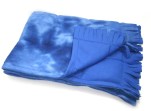
Weighted vests and weighted lap pads are also on the market, providing a different kind of pressure for sensory seeking individuals. Find your favorite weighted tool today!
Here are some interesting reads if you are interested to understand better the benefits of pressure:
- “Exploring the Safety and Therapeutic Effects of Deep Pressure Stimulation Using a Weighted Blanket,” Occupational Therapy in Mental Health, 2008. http://www.tandfonline.com/doi/abs/10.1300/J004v24n01_05#.VLaFWyvF889
- “Calming Effects of Deep Touch Pressure in Patients with Autistic Disorder, College Students, and Animals,” Journal of Child and Adolescent Psychopharmacology, 1992. http://online.liebertpub.com/doi/abs/10.1089/cap.1992.2.63
- “Serotonin and Prefrontal Cortex Function: Neurons, Networks, and Circuits,” Molecular Neurobiology, 2011. http://link.springer.com/article/10.1007/s12035-011-8214-0




 Special Needs Essentials Blog