Happy New Year! Here are some positive thoughts to start the year right by Elise Ronan from Raising Asperger’s Kids. Elise is the mother of two children with asperger’s syndrome. She just started a parent coaching business in conjunction with her blog and we wish her good luck!

“Kindness or shall we say empathy is a rather misunderstood emotion in those on the autism spectrum. There are recent studies that theorize that it’s not that autistics lack empathy or kindness, its just that they are so overwhelmed by their empathetic emotions that they need to turn it off or be consumed. So the issue then surrounding autistics is not that they don’t empathize, but that in fact empathize too much. Autistics unlike their neurotypical peers have no filter on how to protect their own emotions and their own well-being when dealing with the vagaries and cruelties of life. I know I have seen it first hand with both of my boys.
It is never that the boys don’t care. It is, without a doubt, that when they hear of a cruelty or an unkindness it takes over their souls. It is not an obsession. It is not a perseveration. It is a feeling of being lost and not understanding that they cannot solve the world’s issues on their own. They don’t seem to grasp at times that they can only do so much as an individual person. They feel that they in fact have failed.
So that is our mission with them. Not to teach them to be empathetic but to understand their limitations as human beings. To know that you can give charity, help at a food bank and feed people at a soup kitchen, but that in the end there will still be those who go to bed hungry at night, and that you as a human being did not fail. We can do so much as one person. They need to understand that our limitations makes our efforts no less important, not less heart-felt, not less perfect, not less in the moment helpful and appreciated.
It is times like this that I try, despite CM1′ s rejection of religion, to bring up what the Talmud says about kindness, empathy and charity:
To save a single life is to have saved an entire world.
The Rabbis knew that human beings are just that, human beings. We can do just so much in our lives. It is the effort too that counts. A single kindness, even holding open a door for the person behind you, makes this a better world. A smile, a thank you and a helping hand, to the person right in front of you says more about your life than anything else.
Meanwhile here are some past posts about the boys, empathy, kindness and charity. The entire psychology professionals who think they understand who aspergeans or autistics happen to be, who decry that those on the spectrum have any thought of others, simply need to get out a lot more and meet some of those in the autism community face to face. But that means they the so-called “Autistic Experts” would need to have empathy, understand kindness and respect people’s differences, so I am not holding my breath.”
Elise Ronan
Read the original post here

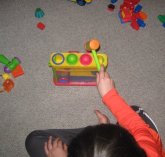 “Now that the holidays are winding down, it’s time to sort through the gifts that were received! Dominic got some awesome presents at Christmas, but one of his favorite toys from years gone by, is a “pound-a-ball” toy. It was given to him by a friend whose two children had outgrown it. Lucky us, right? There are so many cool things about the toy that I don’t really mind the constant banging. 🙂
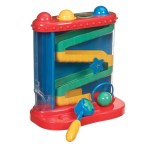 I love that this particular toy has strengthened his motor skills and aided him in matching his colors. He can now match the balls to the colors of the holes on the top of the toy! That is awesome, because he used to not be able to do that. Dominic watches very little television and instead prefers to play with his toys.
 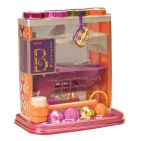 If you asked him right now what he thinks of the “pound-a-ball” toy, I guarantee his response back would be, “good!”


 Special Needs Essentials Blog