
Handwriting… All kids can find this difficult to master but special needs kids have a greater chance to experience the tears of frustration at school or at home while trying to get their homework done. The reason for this varies: either the body is not well positioned, the child lacks attention or coordination, there is a medical condition, you name it. Thankfully, there are exciting ways to promote handwriting skills that will work with almost every child!
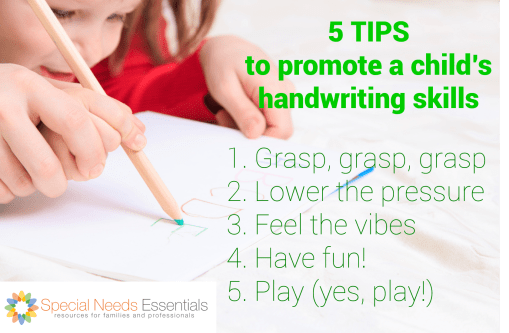
1. Grasp, grasp, grasp
Handwriting starts with good positioning of the whole body and fingers on the writing tool. It may be too abstract for your child to follow your directions as you explain or show them, so think of those pencil grips or claws to physically guide their hand. Heavy pens are another affordable and efficient way to improve their grasp by building hand muscles strength.



2. Lower the pressure
 Handwriting problems often come from a too strong pressure applied by the child to the pen. Use stress balls at any time to encourage your child to relax their hand muscles and promote fine motor skills.
3. Feel the vibes
 The Squiggle Wiggle is a very original pen that vibrates, creating colored squiggles as an interesting alternative to drawing. It encourages fine motor control and helps your child appreciate writing while staying creative.
4. Have fun!
Think of fun activities that involve writing or drawing such as: drawing around your hand, making an herbarium (simply run a color pencil on a paper to transfer leaves’ relief), or playing Pictionary with the whole family! They should improve your child’s handwriting skills without tears.



5. Play (yes, play!)
 Let kids play their favorite game on a phone or tablet with an adapted stylus. They look just like a pen and will train them as if it were the real thing… except they are playing!
If those simple tips are still not effective enough, don’t hesitate to ask the help of an Occupational Therapist who will have a better understanding of your child’s abilities.
Did you find new tips to try with your child in this article? If you have more tips, please share with other readers!






 Special Needs Essentials Blog