Archives for posts with tag: Family

Happy New Year! Here are some positive thoughts to start the year right by Elise Ronan from Raising Asperger’s Kids. Elise is the mother of two children with asperger’s syndrome. She just started a parent coaching business in conjunction with her blog and we wish her good luck!

2015

“Kindness or shall we say empathy is a rather misunderstood emotion in those on the autism spectrum. There are recent studies that theorize that it’s not that autistics lack empathy or kindness, its just that they are so overwhelmed by their empathetic emotions that they need to turn it off or be consumed. So the issue then surrounding autistics is not that they don’t empathize, but that in fact empathize too much. Autistics unlike their neurotypical peers have no filter on how to protect their own emotions and their own well-being when dealing with the vagaries and cruelties of life. I know I have seen it first hand with both of my boys.

It is never that the boys don’t care. It is, without a doubt, that when they hear of a cruelty or an unkindness it takes over their souls. It is not an obsession. It is not a perseveration. It is a feeling of being lost and not understanding that they cannot solve the world’s issues on their own. They don’t seem to grasp at times that they can only do so much as an individual person. They feel that they in fact have failed.

So that is our mission with them. Not to teach them to be empathetic but to understand their limitations as human beings. To know that you can give charity, help at a food bank and feed people at a soup kitchen, but that in the end there will still be those who go to bed hungry at night, and that you as a human being did not fail. We can do so much as one person. They need to understand that our limitations makes our efforts no less important, not less heart-felt, not less perfect,  not less in the moment helpful and appreciated.

It is times like this that I try, despite CM1′ s rejection of religion, to bring up what the Talmud says about kindness, empathy and charity:

To save a single life is to have saved an entire world. 

The Rabbis knew that human beings are just that, human beings. We can do just so much in our lives. It is the effort too that counts. A single kindness, even holding open a door for the person behind you, makes this a better world. A smile, a thank you and a helping hand, to the person right in front of you says more about your life than anything else.

Meanwhile here are some past posts about the boys, empathy, kindness and charity. The entire psychology professionals who think they understand who aspergeans or autistics happen to be, who decry that those on the spectrum have any thought of others, simply need to get out a lot more and meet some of those in the autism community face to face. But that means they the so-called “Autistic Experts” would need to have empathy, understand kindness and respect people’s differences, so I am not holding my breath.”

Elise Ronan

Read the original post here

Today we are honored to share Diane Cassellius’ advice on holiday gifts for children with special needs! Diane is the wife of a Navy officer and the mother of 5 beautiful children. She lives in a beautiful New England town where the quality of life is second to none. She holds a graduate degree in psychology with a focus on medical health psychology. One of her children, Sam, has special needs – both medically and developmentally. Her passion is sharing their story and educating and advocating for those who are parents of chronically ill children.

Diane

  1. Sensory Overload:

Your child is subjected to sensory overload on a daily basis; this provides anxiety, frustration and distress. School can be a stressful environment for your child, where they are surrounded by a multitude of stressors such as large crowds, bright lights and excessive noise. The classroom can be an over stimulating place for them with simply too much information to process.

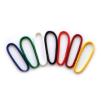
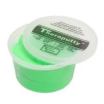
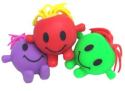
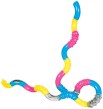
Sensory tools such as “chewelry,” fidget toys, and stress balls are simple and inexpensive, yet valuable tools to help your child cope with sensory overload.

necklace set 2 putty green 2 7809_1 robby

Consider these tools as great stocking stuffers so that your child will have the tools he or she needs at home. Having these items will help improve their quality of life. They will not only benefit them, keeping them calm and happy, but the entire family as well.

  1. Autistic Spectrum Disorder and other Sensation Seeking:

Contrary to what many people think, not all special needs children, especially autistic children, are over responsive to stimuli, in fact, quite the contrary. Some children are actually under responsive; they are referred to as “sensory seeking.” This is because their need for sensory stimulation actually needs to be intense.

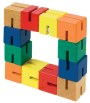
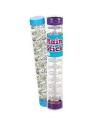
There are certain sensory tools or toys that respond to your child’s action. These are the tools that offer feedback (sounds, lights and movement). They can help children with a sensory processing disorder focus their attention, calm themselves and decrease hyperactive or impulsive responses. Building blocks, touch and feel items, and puzzles are also great examples.

6496_3 9288_4 79394_2 79826_2 rainstick 2

For children who are sensory seekers, it will be important to find toys or items they can relate to and that they are interested in. Otherwise, the items will not be used for their intended ways which are to provide the sensory input the child desires.

  1. Auditory Processing Issues:

Auditory Processing Disorder (APD) is a complex issue, affecting 5% of all school aged children. Children with these issues cannot process information or hear things the same way other same-aged peers can. This not only affects the way a child hears but also the way a child speaks. For example, subtle differences between sounds and words are not recognized. Speech signals a sound that needs to be presented under optimal conditions. People with APD can miss parts of speech because it is too fast and too complex. When multiple sounds are heard, often-competing sounds can be missed. As a result, children miss or misunderstand certain parts of perceived communication.

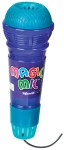
181_1If a child plays with the right auditory toy or tool, it can help provide them with the ability to integrate sounds. My son, Sam used these all the time. The magic microphone can help a child amplify his voice, or even help a child who is non-verbal. When the child will be able to hear his voice thanks to this toy, this will provide positive reinforcement, which will encourage him to make that sound again.

Diane

http://5littlemonkeys.me/