
Archives for posts with tag: Motherhood

1. Express your feelings

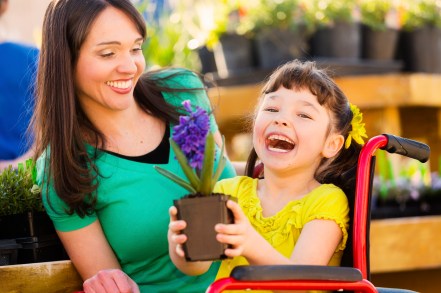
It is not so easy to express our feelings in this modern society where communication is digital and everything is thought to maximize efficiency. However, most children with special needs keep expressing their feelings with no reservation, and sometimes even without words. And that’s one of the many reasons they are so loveable. There is no shame in saying your fears, your frustrations, your gratitude, your love or all other feelings out loud. Just try to find the right words and follow their example!
iStock_000037515950_Large

2. Let it go

Caring for a person with special needs can be challenging. Sometimes they want to go out dressed up like superheroes, other times they want to eat breakfast for dinner, and you want to say it’s not appropriate but your only objective is to take good care of them. After all, why not? It’s their way to teach you that you cannot control everything. So when taking care of yourself as well, ask the question: “if it makes me happy, why not?”

3. Stay positive

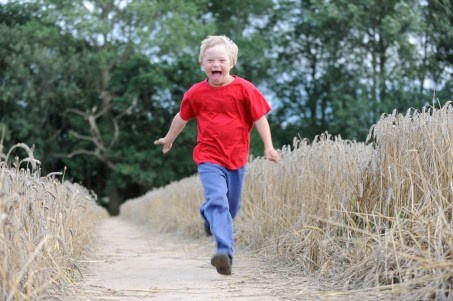
Kids with special needs can have a hard time at school, at medical appointments and in so many aspects of life. But they are not always self-conscious and they manage somehow to keep their head up. When they smile at us, they are so inspiring. So if they can do it, how can we even think negatively? Be grateful for what you have and try to view all matters with your positive eyes. That is what they teach us.
iStock_000014154636_Large

Do you find these lessons to be true with your kids? Are you ready to learn from them? Leave a comment if you wish.

Happy New Year! Here are some positive thoughts to start the year right by Elise Ronan from Raising Asperger’s Kids. Elise is the mother of two children with asperger’s syndrome. She just started a parent coaching business in conjunction with her blog and we wish her good luck!

2015

“Kindness or shall we say empathy is a rather misunderstood emotion in those on the autism spectrum. There are recent studies that theorize that it’s not that autistics lack empathy or kindness, its just that they are so overwhelmed by their empathetic emotions that they need to turn it off or be consumed. So the issue then surrounding autistics is not that they don’t empathize, but that in fact empathize too much. Autistics unlike their neurotypical peers have no filter on how to protect their own emotions and their own well-being when dealing with the vagaries and cruelties of life. I know I have seen it first hand with both of my boys.

It is never that the boys don’t care. It is, without a doubt, that when they hear of a cruelty or an unkindness it takes over their souls. It is not an obsession. It is not a perseveration. It is a feeling of being lost and not understanding that they cannot solve the world’s issues on their own. They don’t seem to grasp at times that they can only do so much as an individual person. They feel that they in fact have failed.

So that is our mission with them. Not to teach them to be empathetic but to understand their limitations as human beings. To know that you can give charity, help at a food bank and feed people at a soup kitchen, but that in the end there will still be those who go to bed hungry at night, and that you as a human being did not fail. We can do so much as one person. They need to understand that our limitations makes our efforts no less important, not less heart-felt, not less perfect,  not less in the moment helpful and appreciated.

It is times like this that I try, despite CM1′ s rejection of religion, to bring up what the Talmud says about kindness, empathy and charity:

To save a single life is to have saved an entire world. 

The Rabbis knew that human beings are just that, human beings. We can do just so much in our lives. It is the effort too that counts. A single kindness, even holding open a door for the person behind you, makes this a better world. A smile, a thank you and a helping hand, to the person right in front of you says more about your life than anything else.

Meanwhile here are some past posts about the boys, empathy, kindness and charity. The entire psychology professionals who think they understand who aspergeans or autistics happen to be, who decry that those on the spectrum have any thought of others, simply need to get out a lot more and meet some of those in the autism community face to face. But that means they the so-called “Autistic Experts” would need to have empathy, understand kindness and respect people’s differences, so I am not holding my breath.”

Elise Ronan

Read the original post here