
 Today we are thrilled to share the experience of Katia Y. González, OTR/L with crafts! Katia is a recently graduated Occupational Therapist living in Puerto Rico. She started documenting the experiences and life lessons of her OT journey while taking her first courses as an OT student and continues now that she is a pediatric OT.
“When I was a little girl, I used to spend a big part of my free time doing crafts. My grandmother and aunt loved them, so they will always include me and my little sister in their projects. For Christmas, my parents and other family members used to get us all kinds of craft kits. Back then they were just fun activities, but now than I’m an Occupational Therapist, I realize how many important life skills I was learning through those projects.
Crafts help kids develop fine-motor and eye-hand coordination skills as well as tolerance, problem solving and learning to follow instructions. They are also a good opportunity to bond with your child and to work on communication and social skills (such as sharing). Even though today kids seem more interested in electronic devices, I’ve noticed in my practice 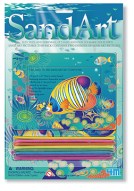 that most kids still love arts and crafts. It’s up to us to provide them with opportunities to participate in such activities.
A couple of weeks ago I received this Sand Art craft kit from Special Needs Essentials to try it out with my kids. It’s a fun craft that can be adapted to kids with different skills.
I used this kit with patients from 4-18 years old. It consists of gradually peeling small pieces of paper from a sticky surface and then applying colored sand to fill the space and form the picture. While doing this activity, we worked on fine-motor skills such as pinch grasp for peeling the papers (a task that was difficult to most of my patients). You can adapt it by starting to peel one corner and letting the kids do the rest.
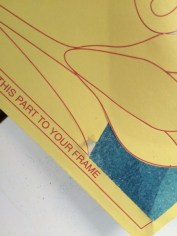
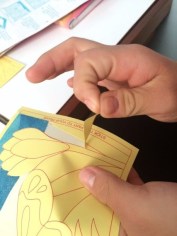
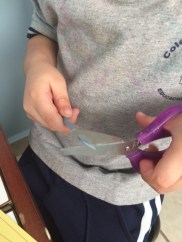
Cutting the tubes (or similar things such as straws) is a great way to introduce scissors skills to little ones, that’s because they are easier to manage than paper and also help to strengthen the small hand muscles.
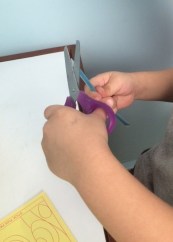
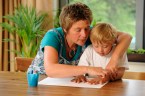
We also worked on developing a tripod grasp (like the one used in writing) while holding the sand tubes. The following little fella had trouble at first, but with some OT help he did much better.
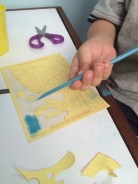
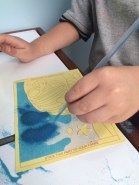
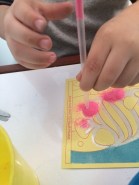
Applying the sand in the right place works on hand-eye coordination skills. If you put it in a bigger container, it requires more motor coordination to be able to pour it without dumping the whole amount at once.
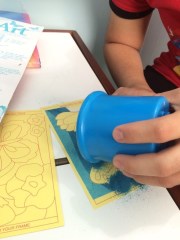
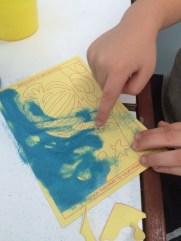
The sand also provides an extra sensory input to this activity. It is important that children get the opportunity to play with different textures to help them develop tactile sensory modulation and discrimination. The boy in the picture below doesn’t like the feel of sand or other similar textures, but because the activity is engaging to him, he is able to compromise so he will be able to see the end product. This is one of the big reasons why crafts are so effective: they provide a great motivation that helps kids work in skills they usually don’t want to.
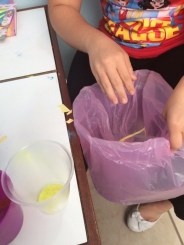
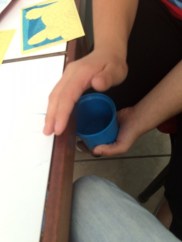
This activity requires to be done one spot at a time, which is great for working on tolerance and following instructions. It is important that the kids are also responsible for the cleanup, which is an independent life skill.
Here two of the end products:
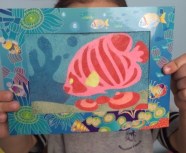
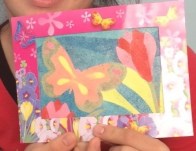
You can make the activity easier by peeling the paper yourself and letting the child just fill the spaces with sand or by peeling larger amounts of paper at once to decrease the steps and time in finishing the activity.
Let me know if you have done something similar with your kids. You can also share crafts ideas in the comments below!“






 Special Needs Essentials Blog